Friday, April 12, 2019

Chiropractic Care Can Help With Menstrual Pain


Menstrual pain (dysmenorrhea) affects women before and during their menstrual cycles.  Often times they can feel not only pain, but lethargy (feeling sluggish), irritability, pain with urination, cramping, nausea, headaches, and vomiting.  Pain typically begins in the lower abdomen and radiates thru to the back and even down the legs for some women.  Over 50% of reproductive-age women report a reduced quality of life during their cycles because of menstrual pain.  Dysmenorrhea and bladder pain syndrome have both been linked to the autonomic nervous system not functioning properly.  Our autonomic nervous system and the reproductive hormones which fluctuate during different phases of the menstrual cycle are directly related.
A 2019 study followed 123 participants with a chief complaint of dysmenorrhea or bladder pain with their cycles.  All patients had their heart rate variability (HRV) measured to test how well the autonomic nervous system was functioning.  The autonomic nervous system (ANS) controls and regulates heart rate, breathing, urination, digestion, pupillary responses, and is the primary mechanism that controls our flight-or-flight response.  In 100% of these patients in the study, they were found to have a lower or dysfunctioning ANS because of a lower heart rate variability response.  When the HRV is high, this means that the autonomic nervous system is functioning properly.  So how does the ANS become dysfunctional?  There are many factors, but the simplest one can be a subluxation or interference on particular nerves that send signals to the bladder and pelvis.  Chiropractic care removes these subluxations with specific adjustments to the spine.  This assists the autonomic nervous system and specifically the pelvic splanchnictic nerve (S2, S3, S4) to function freely without interruption and therefore removes pain and discomfort associated with the menstrual cycle.  Although hormone regulation is an intricate process that the body takes on daily, we can help alleviate issues by removing interference to the autonomic nervous system with chiropractic care.  Our office has seen great success in relief of menstrual pain and bladder control issues with just a few visits for specific, gentle chiropractic care.


Yours in Health,


Dr. Nicholas J. Knutson, DC
Owner/Doctor

MOUNTAIN ISLAND CHIROPRACTIC

10917 Black Dog Ln., Suite 101 

Charlotte, NC 28214

Tel (704) 394-8556

Fax (704) 395-8556


"If you laugh, you think, and you cry, that's a full day. That's a heck of a day. You do that seven days a week, you're going to have something special." JV


Oladosu, F. A., Hellman, K. M., Ham, P. J., Kochlefl, L. E., Datta, A., Garrison, E. F....Tu, F. F. (2019). Persistent autonomic dysfunction and bladder sensitivity in primary dysmenorrhea. Scientific Reports, 9(1). doi:10.1038/s41598-019-38545-3.

Wednesday, April 3, 2019

Ear Infections in Children


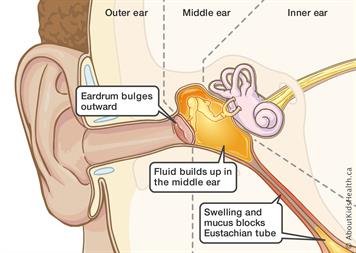
Before the age of 3, it is estimated that 80% of children will experience at least one ear infection (otitis media), while over 40% of children will have multiple ear infections by the age of 5.  Children often experience pain, irritability, fever, disturbed sleep patterns, loss of appetite, and general feelings of malaise during these times.  Most often, viruses are the cause of ear infections, and therefore giving a child an antibiotic will not help relieve the infection.  During an ear infection, fluid gets trapped in the middle ear because of swelling in the inner ear or eustachian tube.  Fluid then builds up in the middle ear and causes the eardrum to bulge outward, causing immense pain.  When we are fighting off a virus, our lymphatic system is trying its best to remove the infection however if the eustachian tube is blocked then you have a backup of the lymph system.  Often times you will see an associated bulging of the lymph nodes of the neck and face as a result of a backed up system.  When an antibiotic is given for a non-bacterial infection, it simply removes all good flora from the gut and therefore delays the healing time, as well as changes our immune system to become immune to those antibiotics with repeated use over a short period of time.
Chiropractic care offers relief but most importantly prevention of ear infections.  How does this work?  A chiropractor looks to find subluxations or "blockages" in the childs nervous system, or misalignments of the neck and spine that house the nerves that deliver the messages to the eustachian tubes.  By removing the interference to the ear, fluid is allowed to drain properly down the eustachian tube and out of the lymphatic system.  A recent research study suggests that upwards of 93% of all children under the age of five receiving chiropractic care showed improvement with ear infections with 75% of those children getting better within the first 10 days.  43% of these children only needed one or two adjustments to relieve the ear problems completely.  Want to know more about how chiropractic helps with ear infections?  Call our office today!

Yours in Health,
Dr. Nicholas J. Knutson, DC
Owner/Doctor

MOUNTAIN ISLAND CHIROPRACTIC

10917 Black Dog Ln., Suite 101 

Charlotte, NC 28214

Tel (704) 394-8556

Fax (704) 395-8556


"If you laugh, you think, and you cry, that's a full day. That's a heck of a day. You do that seven days a week, you're going to have something special." JV


Ear infection: a retrospective study examining improvement from chiropractic care and analyzing for influencing factors (Abstract), Journal of Manipulative and Physiological Therapeutics.

Tuesday, March 26, 2019

Pain After Back Surgery? Study Shows Chiropractic Can Help

Back pain is the number one cause of disability in the United States.  Living with chronic pain causes us to lose joy and miss out on important activities in our daily lives.  Patients are often told how to "deal or manage the pain" by taking prescription medications or eventually turned to surgery to try and fix their pain.  According to the University of Oregon 2017 study, there was an estimated 1,150,000 back surgeries performed in 2015. And of those surgeries, between 8%-20% had a second surgery within ONE year!  The reason why back surgery often fails and the patient is still experiencing pain? It's simple, the cause of the pain was never discovered.  They simply went to the spot of the pain and tried to mask the symptoms.
A 2019 case study followed a 62-year old woman who suffered from chronic low back pain after two different back surgeries.  She originally had surgery at 42 years old and again at 49 years old due to persistent pain post-surgery.  She had been placed on 13 different medications to try to ease the pain over the course of those 20 years.   After a chiropractic examination, she was diagnosed with scoliosis, dysautonomia (her autonomic nervous system was not functioning properly), and multiple vertebral subluxations (interferences of the nervous system in the spine).  She underwent an initial 3 months of chiropractic corrective care, in which her low back pain decreased significantly and her scoliosis improved with a change in her scoliotic curve shown on post thermal scans and xrays.  She was able to come off of her pain medications and reported a significant increase in her overall quality of life!  She reported that for two decades she was unable to go through a single day without unmanageable pain at some point during her day, and after chiropractic care no longer went one day where the pain was not tolerable!
Chiropractic adjustments offer specific, gentle relief for patients looking to avoid medications and surgery and to keep their bodies operating at full potential!  Have more questions on how chiropractic specifically treat back pain?  We are here to help!

Yours in Health,

Dr. Nicholas J. Knutson, DC
Owner/Doctor

MOUNTAIN ISLAND CHIROPRACTIC

10917 Black Dog Ln., Suite 101 

Charlotte, NC 28214

Tel (704) 394-8556

Fax (704) 395-8556


"If you laugh, you think, and you cry, that's a full day. That's a heck of a day. You do that seven days a week, you're going to have something special." JV


Lapham-Yaun, R., D.C., & Castro, K., D.C. (2019). Improved Spinal Alignment, Chronic Low Back Pain and Improved Quality of Life in a 62-year-old Patient Undergoing chiropractic Care Following Failed Surgical Syndrome: A Case Study & Review of the Literature. A. Vertebral Subluxation Res., 10-21.

Tuesday, March 12, 2019

How Much Water Should You Drink?


A question I get asked often in my practice is "how much water should I drink?"  The answer to this varies person to person.  Often times you hear the phrase to drink 8 glasses of 8 ounces of water per day.  Although this is an excellent measurement to base water consumption on, there are other factors to consider when trying to reach an adequate hydration goal.
Most people are not great about water consumption, and quite honestly water can be an excellent "fix" to help with a lot of ailments.  Every cell, organ, and tissue in our body needs water to function properly.  Water not only hydrates our cells, but it eliminates waste through our urine and stool, regulates our body temperature, lubricates tissues and joints, and helps in protection of our vital organs.  Factors that take away water from our body include exercise, perspiration, hot weather, drinking soda and other sugary drinks, bowel movements, and pregnancy or breast-feeding.
I tell patients all of the time that the best measurement on how well-hydrated you are is the color of your urine and the frequency in which you urinate.  "Healthy" looking urine should be a pale or light yellow.  Dark urine especially with a strong odor means you are behind the hydration gauge.  Often times if you are feeling thirsty, your cells are already in the dehydration state.  Also, if hunger feelings start it is best to drink water first, as thirst signs can easily be mistaken for hunger pains.
Every morning you should start the day by  drinking a glass of water at least 16 ounces in size.  It not only awakens the organs and digestive system after sleep, but it jump starts your metabolism, flushes out toxins, awakens the brain and nervous system, and even can aid in weight loss by curbing your appetite for a short time.  Your body has been hard at work while you sleep, and you should replenish that hard work with water first thing.  I also suggest if possible to drink an alkaline water with a pH of 8 or higher, especially first thing in the morning.  Also, if available room temperature water is best for optimal absorption and digestion throughout the day. 
Tracking water consumption can just seem like one more thing to have to do during our day.  My advice is to simply try to substitute water in a few places where you normally wouldn't.  Start your day with 1-2 glasses or water, have water with lunch or keep a bottle at your desk with you during the work day.  When the afternoon hunger hits start with a glass of water before you have a snack.  Try to drink a bottle to and from your commute to work.  Drink a glass as you're getting ready for bed.  A trick with my kids is they take  water bottles that can have fruit infused to school so that they drink more throughout the day.  Small changes to your water consumption daily will have large effects on your overall health!

Yours in Health,

Dr. Nicholas J. Knutson, DC
Owner/Doctor

MOUNTAIN ISLAND CHIROPRACTIC

10917 Black Dog Ln., Suite 101 

Charlotte, NC 28214

Tel (704) 394-8556

Fax (704) 395-8556


"If you laugh, you think, and you cry, that's a full day. That's a heck of a day. You do that seven days a week, you're going to have something special." JV

Thursday, February 14, 2019

Reducing the Risk of Heart Disease


With February in full swing, we bring attention to the epidemic of heart disease this month.  About 1 out of every 3 deaths is related to heart disease, and every day it kills more than 2300 people.  That equates to approximately one death every 38 seconds!  The best thing to combat heart disease is to prevent it.  Although scary, cardiovascular disease research has given us plenty of data to recognize risk factors associated with it.
Things like eating a poor diet, lack of exercise, lack of sleep, smoking, chronic stress, diabetes, poor weight management, and high blood pressure all are considered risk factors for heart disease.  Another important preventative tool to fight heart disease is chiropractic adjustments.  Most people think of chiropractic care as a last resort for pain management, we believe it should be included in preventative care for all types of diseases.  Cardiovascular disease and the associated risk factors are greatly influenced by other systems of the body, especially the nervous system.  By correcting interference or subluxations to the nervous system, the body is allowed to heal and function properly.   A positive effect chiropractic care has been found to help with is inflammatory markers like immune system responses such as C-reactive protein among others.
A 54-year old male suffering from high cholesterol was studied who also had a history of heart attack and reported experiencing stress and depression both at work and at home. He also had a history of anxiety, constipation, fatigue, irritability, mood swings, neck pain, and stiff neck.  He received regular chiropractic adjustments over a five-month period.  At the end of those 5 months, his cardiologist was able to decrease the amount of cholesterol medication he prescribed to the patient!  By removing the interference that caused his body to operate at a dysfunctional level, symptoms were reduced and risk factors lowered!  Optimal function yields optimal performance!

Yours in Health,

Dr. Nicholas J. Knutson, DC
Owner/Doctor

MOUNTAIN ISLAND CHIROPRACTIC

10917 Black Dog Ln., Suite 101 

Charlotte, NC 28214

Tel (704) 394-8556

Fax (704) 395-8556


"If you laugh, you think, and you cry, that's a full day. That's a heck of a day. You do that seven days a week, you're going to have something special." JV


Zielinksi, E., BA, & Blume, N. A., DC. (2013). An Epidemiological Approach to Subluxation-Based Chiropractic Care and CVD Risk Factors:A Case Study and REview of the Literature. A. Vertebral Subluxation Res., 2013, 77-99.

Wednesday, January 30, 2019

Reflux in Infants

Have you been told by your pediatrician that your baby has reflux or GERD?  This occurs when the contents of the stomach start to ascend up the esophagus causing heartburn and irritation.  Infants will often persistently "spit up" after feedings and continue throughout the day.  There has been a dramatic spike of reflux drugs prescribed to infants over the last 5 years.  These medications such as ranitidine and omeprazole have not thoroughly been tested and safety measures have not been set in the pediatric population.  Parents are turning to alternative therapies to treat reflux instead of traditional medications.
Chiropractic care can correct reflux in infants by removing interference to the spine and nervous system.  Birth is traumatic on an infants head, neck, and spine.  By correcting the interference (or subluxation), the body is allowed to function properly.  Babies have fast response times to adjustments. Often parents report complete resolve of reflux after chiropractic treatment, as well as better sleeping, better eating, regularity of bowel movements, and an overall improvement in temperament in these infants.  A 2016 case report described a 1-month old girl who's parents sought chiropractic treatment for her GERD that worsened at night, or when the child lay flat.  The child saw immediate improvements that lasted about one day with initial adjustments.  Over 3 months of care, the patient continued to improve and by the end of the 90 days of treatment she no longer had reflux issues with regular chiropractic adjustments!  The goal of chiropractic care is to improve function and allow the body to heal naturally.  Healing takes time and repetition, even in pediatric populations!  We offer gentle, specific adjustments to treat reflux or GERD patients of all ages.  Turn to chiropractic care for an alternative to a possible lifetime of medications for reflux.


Yours in Health,

Dr. Nicholas J. Knutson, DC
Owner/Doctor

MOUNTAIN ISLAND CHIROPRACTIC

10917 Black Dog Ln., Suite 101 

Charlotte, NC 28214

Tel (704) 394-8556

Fax (704) 395-8556


"If you laugh, you think, and you cry, that's a full day. That's a heck of a day. You do that seven days a week, you're going to have something special." JV


Ferranti, M., Alcantara J., Reilly A. Resolution of GERD in an Infant Following Chiropractic Care:A Case Report & Selective Review of the Literature. J Pediatric Maternal & Family Health. 2016 (2):46-49.
 

Thursday, January 24, 2019

Feeling HOT?? Get Help With Hot Flashes!


Hot flashes are commonly associated with menopause, meaning that women over age 45 are especially susceptible to them.  Although menopause is the number one reason for hot flashes, other conditions such as chemotherapy treatments, hormone replacement therapy, post-surgery on the ovaries and fallopian tubes, and medication side effects.  We often forget that men are just as susceptible to hot flashes following chemotherapy treatments and as a side effect of medications as well.  Hot flashes are technically defined as "sudden feelings of warmth, which are usually most intense over the face, neck, and chest."  Sweating, and post flash chills often follow hot flashes, and these episodes can last anywhere from 30 seconds to 15 minutes!  Often times they occur randomly, and as frequent as every few minutes.  This effects patients daily activities as well as sleep cycles.
A 6-week study followed a 57-year old woman who sought chiropractic treatment to help with hot flashes that were happening upwards of 10 times per day.  Interferences to her spine and upper neck were discovered (subluxations) upon examination.  This is important as our nervous system controls all functions in the body.  The interference to her nervous system was impacting the signals being sent to her endocrine system which regulates our hormones.  This woman received specific, gentle adjustments to the upper cervical neck and spine and 6 weeks later reported complete 100% resolution of her hot flashes!
Our office is expertly knowledgeable on hot flashes and how they affect daily life for our patients.  We have seen great results with this condition and are passionate about helping our patients live their lives free from hot flashes!

Yours in Health,

Dr. Nicholas J. Knutson, DC
Owner/Doctor

MOUNTAIN ISLAND CHIROPRACTIC

10917 Black Dog Ln., Suite 101 

Charlotte, NC 28214

Tel (704) 394-8556

Fax (704) 395-8556


"If you laugh, you think, and you cry, that's a full day. That's a heck of a day. You do that seven days a week, you're going to have something special." JV


Slagel, J., DC. (2018). Resolution of Hot Flashes in a 57-year old Female Following Upper Cervical NUCCA Care:A Case Report & Review of Literature. J. Upper Cervical Chiropractic Research, 2018(1), 46-53.